The CTFC informs you that the access and use of the website FIREWINE.EU and all the subdomains and directories included under it (hereafter, jointly referred to as the Portal) are subject to the terms detailed in this legal notice, without prejudice that access to any of these services or content may require the acceptance of additional general conditions.
The CTFC reserves the right to make changes to the Portal without prior notice, with the aim of updating, correcting, modifying, adding or removing the contents or the design. Due to the absence of real-time updates, we recommend consistently verifying the reliability and precision of the information, services, and content provided. Furthermore, the provisions and stipulations within this notification are subject to change; therefore, we extend an invitation for you to revisit the Portal and review these terms anew.
I. Intellectual property and industrial property rights
Both the design of the Portal and its source codes, as well as the logos, brands and other distinctive signs that appear in it, belong to the CTFC or collaborating entities and are protected by the corresponding intellectual and industrial property rights.
The information available on this website, unless expressly indicated otherwise, is subject to reuse; its total or partial reproduction, modification, distribution and communication being authorized, for commercial and non-commercial uses, subject to the following conditions:
• Denaturing the content of the information is prohibited under any circumstances.
• The user is obliged to mention the source of the documents subject to reuse.
• The user is obliged to mention the date of the last update of the documents subject to reuse
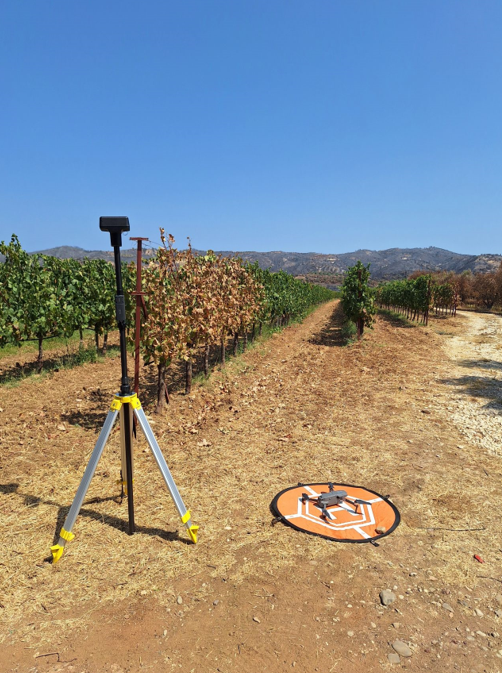
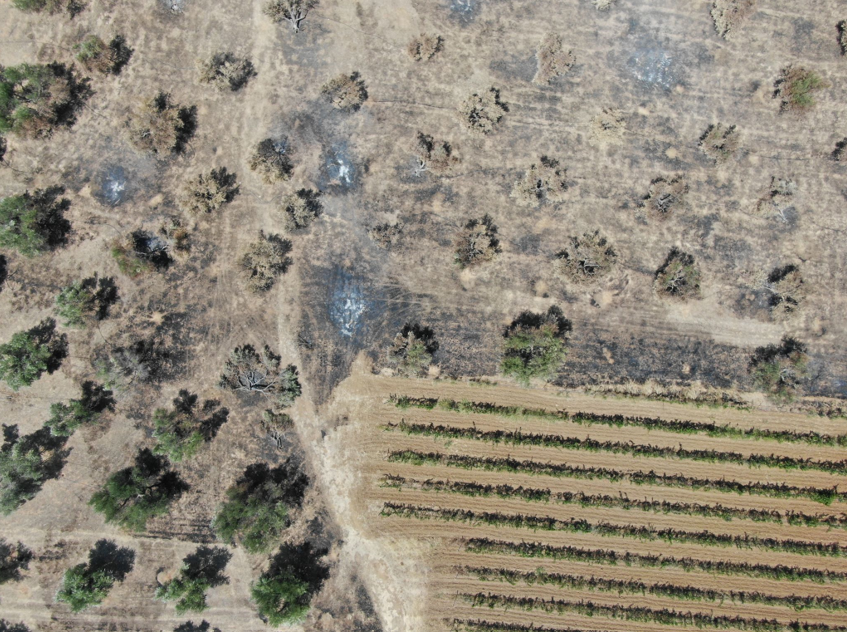
• The images on this portal may be subject to copyright or other rights and conditions of use. Check with the project coordinating team before using them.
The CTFC declares its respect for the intellectual and industrial property rights of third parties; therefore, if you believe that this site may be violating your rights, please contact the CTFC.
II. Links or hyperlinks
Users who intend to establish a link between their website and that of the CTFC must take the following into account:
1. The establishment of the hyperlink does not imply, in any case, the existence of relations between the CTFC and the owner of the web page, nor the acceptance and approval by the CTFC of its contents or services. Therefore, it will not be declared or implied that the CTFC has expressly authorized the hyperlink , nor that it has supervised or assumed the contents and services offered or made available on this web page.
2. The CTFC is not responsible, in any way, nor guarantees the quality, accuracy, reliability, correctness or morality of content or services that the establishment of the hyperlink may offer. The user assumes sole responsibility for any consequences, damages or actions that may arise from accessing the hyperlinked web page .
3. The web page on which the hyperlink is established may not contain any brand, denomination, logo, slogan or other distinctive signs belonging to the CTFC, except for those signs that form part of the hyperlink itself .
4. The web page on which the hyperlink is established will not contain information with illegal content, contrary to morality and generally accepted good customs and public order, nor will it contain content contrary to the rights of third parties.
III. Frames
The CTFC expressly prohibits the creation of frameworks ( framing ) or the use by third parties of any other mechanisms that alter the design, original configuration or contents of its Portal.
IV. Cookie policy
WHAT ARE COOKIES?
A cookie is a small text file that a website stores in the user's browser. Cookies facilitate the use and navigation of a web page and are essential for the functioning of the internet, providing countless advantages in the provision of interactive services.
Cookies are used, for example, to manage the user's session (reducing the number of times the password must be entered) or to adapt the contents of a web page to your preferences and therefore improve the experience of use of the web page.
Cookies are classified according to the following categories :
Depending on the duration, we distinguish between "session" or "persistent" cookies . Session cookies will be deleted once the user leaves the web page that generated them, and persistent cookies will remain on your computer for a certain period of time.
Moreover, depending on the entity responsible for managing the equipment or domain from which the cookies are transmitted and the associated data is processed, a distinction can be made between "proprietary" or "third-party" cookies. The former refers to cookies sent to the user's computer from a computer or domain operated by the CTFC, which also provides the requested service. On the other hand, "third-party" cookies are those transmitted to the user's terminal equipment from a computer or domain not operated by the CTFC. In certain cases, even if managed by the CTFC, these cookies are processed by another entity for their own purposes, often by contracted providers such as the web analytics service offered by Google.
Other similar technologies
In addition to the information collected through cookies, we may use other similar technologies such as tracking pixels or web beacons .
Pixels are small graphic files that include a code managed through the URL of a third party and that allow the information collected about the use of the website to be used for analytical and advertising purposes.
The pixels collect information about the browser used, the IP address, the frequency of visits and the time of visits and are also used to track the actions that users perform through the website (such as purchases added to the basket , products purchased, redirections to other web pages, opening of newsletters , actions that generate more visits and purchases, type of interested audience), among others.
Apart from employing tracking pixels or web beacons, we may employ an alternative technique called "fingerprinting" for user identification and tracking. This technique enables us to verify specific technical parameters of the user's device, including the browser, operating system, screen resolution, installed plugins and add-ons, font, IP address, language, and time zone. These parameters, when combined, facilitate the creation of a unique profile. The collected information will be utilized to monitor user activity, navigation patterns, and to generate a comprehensive user profile.
WHAT COOKIES WE USE
On our website we may use technical cookies for internal use, analytics, preferences, social networks and advertising.
You will be duly informed depending on the type of cookies through the following sections established for this purpose on whether the information collected through them can be treated by third parties as co-responsible for the ownership of the requested information.
TECHNICAL COOKIES
They are those that allow the user to navigate through a web page, platform or application and use the different options or services that are available, including those that the CTFC uses to allow the management and operation of the website and enable its functions and services such as, for example, controlling traffic and data communication, identifying the session, accessing restricted access parts, remembering the elements that make up an order (shopping cart), carry out the purchase process of an order, manage payment, control fraud linked to the security of the service, make the request for registration or participation in an event, count visits for the purposes of invoicing software licenses with which the service (website, platform or application) works, use security elements during browsing, store content for the dissemination of video or sound, enable dynamic content (such as loading animation of a text or image) or share content through social networks.
Cookies will be exempt from compliance with the obligations established in article 22.2 of the LSSI when they allow the service requested by the user to be provided, as is the case with the cookies listed in the previous paragraphs. However, if these cookies are also used for non-exempt purposes (for example, for behavioral advertising purposes ), they will be subject to these obligations.
These cookies are necessary and therefore cannot be disabled by the user, and are exempt from consent by article 22.2 of the LSSI.
We inform you that if you block the use of this type of cookie through your browser settings (see section "How to manage cookies" below), the website may not function properly.
You can review the technical cookies used through the "Manage cookies " link that you will find in the footer of the website visited.
REMARKETING/RETARGETING COOKIES
Remarketing or retargeting cookies are those that, controlled by third parties, manage the advertising spaces on third-party web pages that may or may not belong to the CTFC. In this way, users who have visited one of the CTFC websites will be able to view advertising that may be considered of interest to them on these third-party websites.
You can review the technical cookies used through the "Manage cookies " link that you will find in the footer of the website visited.
ANALYTICAL COOKIES
cookies are those that allow the person responsible for these to monitor and analyze the behavior of the users of the web pages to which they are linked, including the number of pages visited, the language used, the frequency and recurrence of visits, the time of visits and permanence in each section of our website, the quantification of the impact of advertisements or the browser used, among others.
The information collected through this type of cookies, either by us or by third parties, allows us to quantify the number of users and thus carry out the measurement and statistical analysis of the use made by users of our website. This is why your navigation through our website is analyzed in order to improve the range of products or services we offer. Among others, we analyze the origin of the visits, the sections and contents viewed and the general browsing time and of each section visited.
You can review the technical cookies used through the "Manage cookies " link that you will find in the footer of the website visited.
SOCIAL NETWORK COOKIES
To make it easier for the user to share website content on different social networks, specific buttons have been included. These buttons may cause the social network to which they link to install cookies that, not being under the control of the CTFC, may have the purpose of managing the user's login to the social network, the maintenance of this session, or show the counter on how many times a certain content has been shared on each social network. We recommend that users regularly review the privacy and cookie policies of each social network and, where appropriate, modify the privacy settings of each to limit the tracking purposes they can perform and adjust these settings to their own interests.
You can review the technical cookies used through the "Manage cookies " link that you will find in the footer of the website visited.
ADVERTISING COOKIES
These are cookies that store information on the behavior of users, obtained through the continuous observation of their browsing habits, which makes it possible to develop a specific profile to show advertising based on it.
They are usually administered by third parties who manage the advertising spaces that users see when accessing our website, or our advertising on third party websites. These cookies allow, among others, to measure the effectiveness of our online campaigns, provide the user with information of interest and offer advertising content of interest related to their browsing profile, as well as limit the amount of impacts advertising that we make to each user.
In accordance with your own policies, some advertising managers may use anonymous cookies to show you advertisements of interest when you visit other web pages, crossing the user information they may have requested from your browsing on our Web or other managed by third parties
WHO USES COOKIE DATA?
The cookies employed on our website encompass both proprietary and third-party cookies.
Detailed insights into data processing procedures can be accessed within our privacy policy, where comprehensive information is available. Third-party cookies are administered directly by the respective entities and are typically utilized for their own objectives. Extensive details can be found in the preceding section or within the cookie configurator, along with the policies of the third parties identified in each corresponding section.
WHERE YOUR INFORMATION IS PROCESSED
By using third-party cookies , it is possible that your data may be transferred outside the European Economic Area or to countries with an adequate level of protection according to the applicable regulations.
Depending on the country of destination, this transfer may involve an international transfer of data to countries that do not offer adequate safeguards.
HOW LONG DO WE KEEP INFORMATION?
You can consult the retention periods of the information obtained by the different cookies through the "Manage cookies " link that you will find at the foot of the website visited.
HOW TO MANAGE COOKIES
When you visit our website for the first time, we offer you the possibility to configure the cookies you want to install or reject. You can refuse the installation of any category of cookie except the technical ones, which are necessary for the correct functioning of the website.
If through the cookie manager you had agreed to install certain cookies that you later wanted to reject and the same cookie manager allowed them, you can modify the initial selection or reconfigure them .
If, on the other hand, your cookie manager does not allow you to reconfigure them , the user will have the possibility at any time to accept or reject the installation of cookies or to reject the installation of a certain type of cookie, by modifying your web browser preferences.
Through your web browser the user can:
Enable private browsing, whereby your browser stops saving browsing history, website passwords, cookies and other information about the pages you visit; or
To activate the do not track function, whereby the browser asks the websites you visit not to track your browsing habits in order, for example, to serve advertising of your interest on the sites you visit
Please note that blocking cookies may affect all or some of the functionalities of our website. For your convenience, below we provide you with the help links for the configuration of cookies of the main browsers:
Microsoft Internet Explorer
https://support.microsoft.com/es-es/topic/eliminar-y-administrar-cookies-168dab11-0753-043d-7c16-ede5947fc64d
Apple Safari
https://support.apple.com/ca-gui/guide/safari/sfri11471/mac
Google Chrome
https://support.google.com/chrome/answer/95647?hl=en
Mozilla firefox
https://support.mozilla.org/es/kb/habilitar-y-deshabilitar-cookies-sitios-web-rastrear-preferencias?redirectlocale=es&redirectslug=habilitar-y-deshabilitar-cookies-que-los-sitios-we
The above links can be updated by the companies developing the browsers. The CTFC will make every reasonable effort to keep the above listing properly updated. However, if any link does not work properly or is not updated, you should know that you can always go to the "Help" menu of the browser to obtain this information.
Please note that if you delete cookies from your browser at any time, your opt-out preferences from previous providers may be deleted , so you will need to re-opt your installation .
Additionally, we inform you that if you want to have greater control over the installation of cookies , you can install programs or add-ons in your browser, known as "Do Not" tools Track ” or “DNT”, which will allow you to choose the cookies you want to enable.
ADDITIONAL INFORMATION
For more information on how you can exercise your rights of access, rectification, deletion, limitation of treatment and portability or any other issue related to the processing of data that we carry out through the use of cookies , consult the Privacy Policy from our website.